
RegenPRP is your own platelet concentrate, prepared with RegenKit in a closed system — autologous, standardised and leucocyte-poor. This page is information, not medical advice.
PRP should always be discussed with a trained professional who can advise on your situation.
Platelet-rich plasma (PRP) is the plasma — the liquid part of blood — in which the platelets are concentrated. It is prepared from the patient’s own blood (autologous). RegenPRP is a standardised, leucocyte-poor PRP.

Beyond their role in haemostasis, platelets are key players in tissue-repair mechanisms. They provide essential growth factors — such as FGF, PDGF, TGF-β, EGF, VEGF and IGF — which are involved in the migration, differentiation and proliferation of stem cells. These platelet growth factors also stimulate fibroblasts and endothelial cells, promoting the deposition of new extracellular matrix and the formation of new blood vessels respectively. The plasma itself carries many factors essential to cell survival: nutrients, vitamins, hormones, electrolytes, growth factors (such as IGF and HGF) and proteins. Among the plasma proteins, the molecules involved in coagulation allow the formation of a fibrin polymer, which acts as a scaffold for cell migration and the generation of new tissue. RegenPRP concentrates these natural components from your own blood, prepared to a consistent standard.

RegenPRP is a well-accepted treatment; PRP therapy has been known and trusted by professional athletes for many years. It is a standardised, reproducible PRP that has been studied in clinical research.
Musculoskeletal disorders — knee osteoarthritis and other joint pain; tendinopathies (Achilles, elbow, knee, shoulder); plantar fasciitis; muscle strain. Hair loss — androgenetic alopecia (not authorised in France*); alopecia areata; endocrine-therapy-induced alopecia (EIA). Women’s intimate health — female sexual dysfunction; lichen sclerosus; stress urinary incontinence. Men’s & urogenital — erectile dysfunction; urinary incontinence; Peyronie’s disease (penile curvature); acute and chronic genito-urinary inflammation.

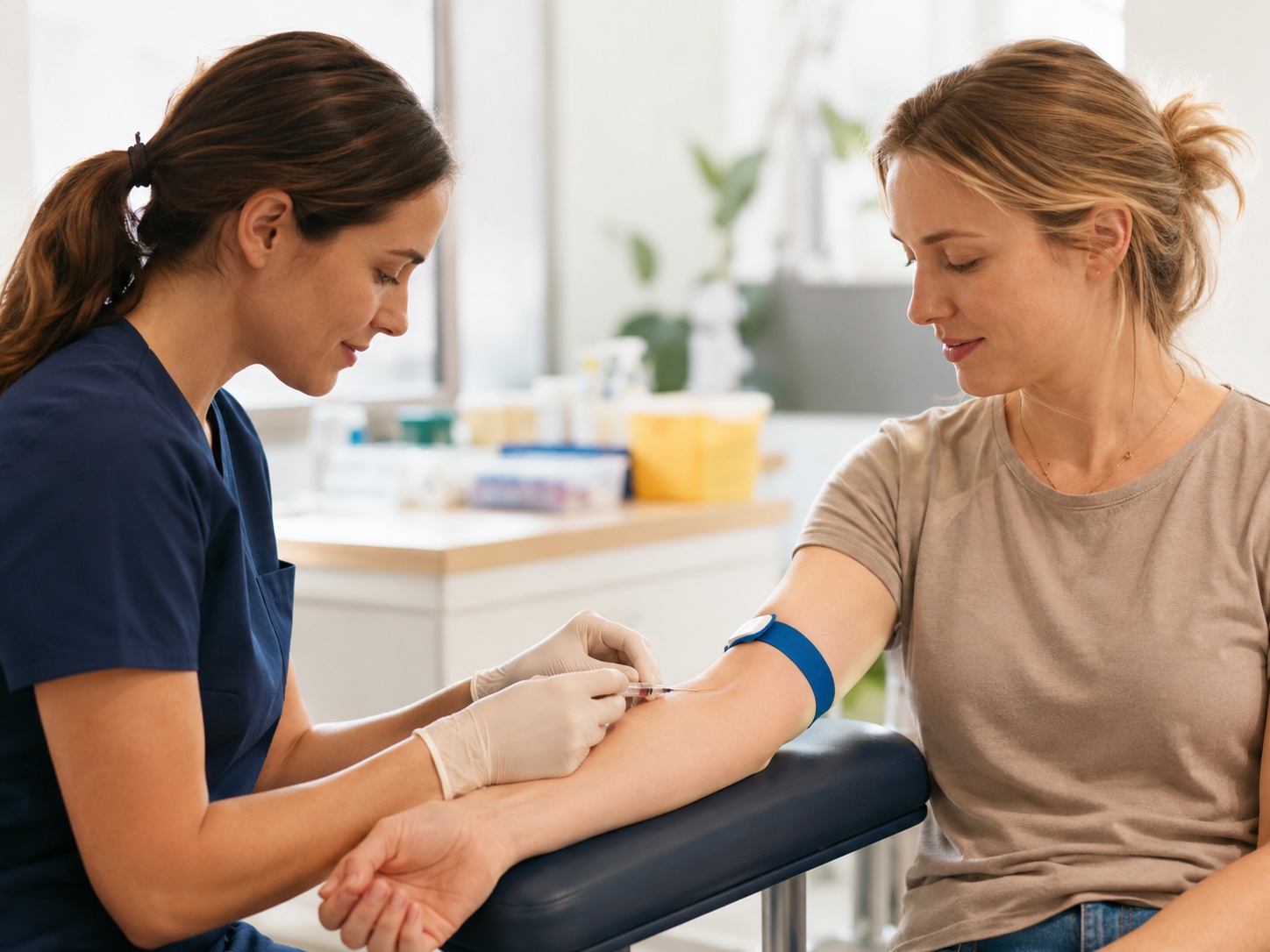
A small quantity of blood is drawn directly into a device specifically designed for preparing PRP in a closed circuit. The blood components are separated by centrifugation: a separator gel inside the tube forms a physical barrier between them, so the PRP components — plasma and platelets — are separated from the pro-inflammatory elements of the blood. Because the whole process takes place in a closed system, the risk of microbial contamination is minimised. Your doctor then injects the RegenPRP into the area to be treated, following good aseptic practice. This is a specialist procedure: only your doctor can tell you whether the treatment is right for you, discuss its contraindications and the other options available, and administer it. It is never done at home or by yourself.
Using your own blood (autologous) and a closed system are designed to keep risks low, and PRP is generally well tolerated. As with any injection there can still be temporary soreness, swelling or bruising. Your doctor will explain the risks for your situation.
It begins with a small blood sample, like a routine blood test; the PRP is prepared on the spot in a few minutes and injected by your doctor. Your blood is not sent to a laboratory.
It depends on the condition and the individual — only your doctor can advise. Be cautious of anyone promising a guaranteed result.
Medical rules differ by country, so authorised uses vary (for example, some hair-loss indications are restricted in France). Your doctor can tell you what applies in your region.
Only a qualified, trained physician. Ask about their training and experience with PRP.